Chapter 1: The Architecture of Curiosity
Learning Objectives
- Understand research as a structured form of storytelling
- Recognize how narrative elements map onto research design
- Examine the neuroscience foundations of hypothesis testing
- Identify the relationship between journalistic and scientific ways of knowing
- Distinguish between everyday knowledge and systematic inquiry
There’s a particular kind of discomfort that settles in when you realize your intuition was wrong. It happened to me a few years ago while watching a Twitch streamer play a notoriously toxic first-person shooter. The chat was predictably chaotic: insults flying, rage-quitting threats, the usual performative aggression. And yet the viewer count kept climbing. I switched over to a cozy farming simulator stream, expecting calmer waters and comparable engagement. The chat was indeed friendlier, but the audience was a fraction of the size.
The pattern seemed obvious: toxicity attracts audiences. It was the kind of observation that feels true because you’ve seen it enough times to build a story around it. Negativity drives engagement. Drama sells. People are terrible.
Except that’s not research. That’s pattern recognition masquerading as knowledge. And the gap between the two is where this course lives.
This book teaches you how to conduct social science research. The examples and dataset come from popular music, but the skills are portable. The same logic that tests whether lyric sentiment predicts chart success also tests whether news framing shapes public opinion, whether advertising exposure changes purchase behavior, or whether social media use correlates with political polarization. Methods don’t belong to a topic. They belong to a way of thinking. Music is the vehicle. The destination is methodological literacy.
Why We Tell Stories (and Why That Matters for Science)
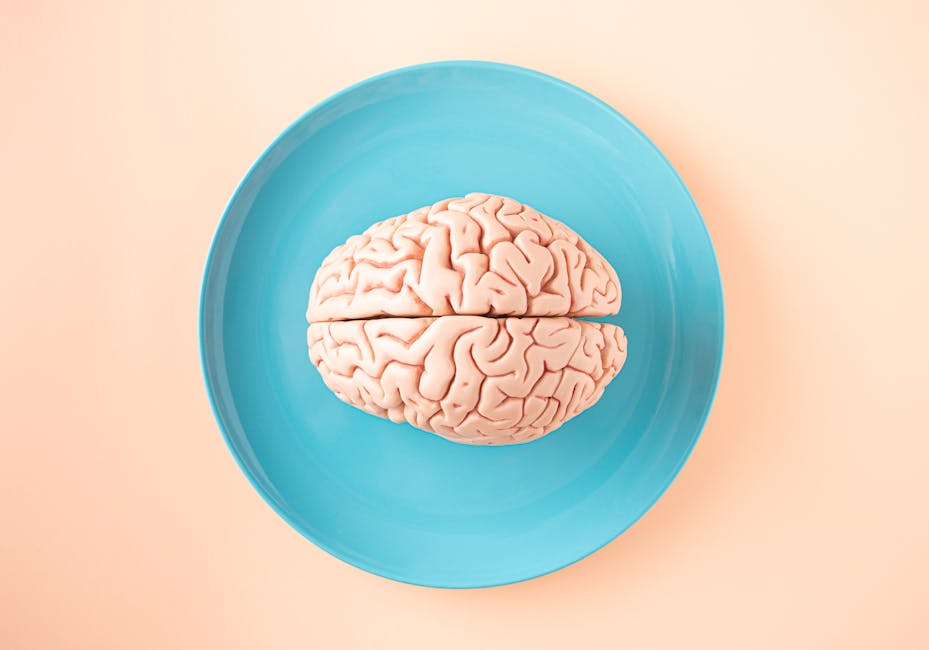
The neuroscientist Lisa Feldman Barrett has spent her career dismantling the idea that the brain passively receives information from the world. In How Emotions Are Made (Barrett, 2017a), she argues that the brain is fundamentally a prediction machine. It generates models of reality, tests those models against incoming sensory data, and updates its beliefs when predictions fail. Her formal articulation of this framework, the theory of constructed emotion, proposes that the prediction-error cycle is not a metaphor for the scientific method but rather its cognitive substrate (Barrett, 2017b). We are, at a neurological level, hypothesis-testing organisms.
Will Storr, in The Science of Storytelling (Storr, 2019), extends this framework to narrative. He suggests that stories emerged as cognitive tools for managing social complexity. They model cause-and-effect relationships, simulate outcomes, and allow groups to coordinate behavior around shared beliefs. When our predictions about the world fail, when the story breaks, we experience cognitive dissonance. Resolution requires either changing the story or rejecting the evidence.
This is worth pausing on, because it reframes what research actually does. We often think of science as the opposite of storytelling: cold, objective, stripped of human subjectivity. But the brain doesn’t toggle between “creative mode” and “analytical mode.” It uses the same narrative machinery for both. The difference lies not in the architecture but in the rigor we apply to testing the story.
The Limits of Everyday Knowing
Before formalizing the scientific approach, it’s worth acknowledging how we actually make sense of the world in daily life. The sociologist Earl Babbie (2021) identifies several common ways of knowing that serve us well enough for everyday navigation but become unreliable when the stakes demand evidence others can trust:
Tradition is what we’ve always done. It offers stability and continuity, but it resists updating and often lacks evidence beyond “this is how it’s done.”
Authority defers to experts or institutions. This is efficient and often necessary, but it’s only as reliable as the expertise itself, which can be misapplied, biased, or compromised by conflicts of interest.
Common sense feels self-evidently true. Yet it’s culturally bound and frequently contradictory. (“Look before you leap” vs. “He who hesitates is lost.”)
Intuition is fast and sometimes insightful, drawing on accumulated experience. But it’s also shaped by cognitive biases, emotional states, and the availability of recent examples.
These shortcuts work well enough for navigating daily life. They become problematic when we try to build knowledge that others should trust, or when the stakes demand more than a good guess. Consider how public health messaging during the COVID-19 pandemic relied on authority (government agencies), tradition (past pandemic playbooks), and common sense (“wash your hands”), while the underlying scientific questions demanded systematic testing that sometimes contradicted all three.
Research offers a more disciplined alternative, not because scientists are smarter or less biased, but because the process itself is designed to expose those biases to scrutiny.
The Sacred Flaw: Hypotheses as Dramatic Tension
Storr (2019) identifies a recurring element in compelling narratives: the “sacred flaw.” This is a deeply held but erroneous belief that the protagonist clings to even as evidence mounts against it. The story’s tension arises from the inevitable collision between this false certainty and reality.
In research, the null hypothesis plays this role. It’s the default story: “Nothing interesting is happening here. Any pattern you see is random noise.” The researcher’s task is to accumulate evidence so overwhelming that maintaining the null hypothesis becomes untenable. When we “reject the null,” we’re forcing the data to tell a new story, one that challenges what we assumed to be true.
This framing transforms statistical significance from an abstract threshold into a narrative device. A p-value of .001 doesn’t just mean “statistically unlikely under the null hypothesis.” It means the old story is so incompatible with the evidence that clinging to it would require willful ignorance.
Consider the Twitch example again. The null hypothesis would be: “There is no relationship between game genre and audience engagement.” My anecdotal observation suggested otherwise, but to move from hunch to knowledge requires systematically testing whether the pattern holds across many channels, many games, many nights. The null hypothesis stands as the skeptical voice saying, “You noticed a few cases. That’s not enough.”
The same logic applies far beyond streaming platforms. A health communication researcher might hypothesize that fear-based anti-smoking campaigns reduce smoking intentions. The null hypothesis says: “Campaign framing has no effect on smoking intentions.” Only systematic data, collected under controlled conditions, can tell us whether the null deserves to be rejected.
Mapping Narrative Structure onto Research Design
If research is storytelling with evidence, then the components of research design should map onto narrative structure. And they do, with surprising precision:
The Inciting Incident: The Research Problem
Every story begins with disruption. The protagonist’s stable world encounters something unexpected, and that disruption demands a response. In research, the inciting incident is an anomaly, an observation that doesn’t fit existing explanations.
During the early months of the COVID-19 pandemic, for instance, Twitch viewership spiked by 87%. Anecdotally, people seemed to be using livestreams to cope with isolation. But was this usage actually meeting psychological needs, or was it simply a default behavior, digital channel-surfing in the absence of other options? The gap between what we observed (increased usage) and what we didn’t yet understand (the psychological function of that usage) became the inciting incident for a research project.
Inciting incidents work the same way across the social sciences. A political scientist notices that voter turnout increased in a district despite reduced campaign spending. A public relations scholar observes that a corporate apology went viral but actually worsened brand sentiment. An advertising researcher finds that a product placement performed better in a low-budget show than in a prestige drama. Each anomaly opens a gap between observation and explanation, and that gap is where research begins.
The Protagonist: The Researcher as Seeker
In detective fiction, the detective gathers clues, formulates theories, and tests them against evidence. The researcher performs the same function. The parallel isn’t accidental: both are engaged in abductive reasoning, working backward from observations to find the most plausible explanation.
Like a detective, the researcher must remain skeptical of convenient narratives and be willing to revise theories when evidence contradicts them. The integrity of the investigation depends on this intellectual honesty.
The Antagonist: Confounds, Bias, and Noise
The antagonist in research isn’t a person. It’s the chaos that obscures truth. Confounding variables muddy causal relationships. Sampling bias makes findings ungeneralizable. Measurement error introduces noise. These aren’t malicious forces; they’re inherent to working with messy, real-world data. But they function narratively as obstacles that the researcher must systematically overcome through rigorous design.
Rising Action: Literature Review and Theory
Before confronting the antagonist, the protagonist needs preparation. In research, the literature review provides this groundwork. Previous studies reveal what is already known, where gaps exist, and which methods have succeeded or failed. Theory provides the conceptual framework, the lens through which we interpret findings and generate hypotheses.
For the Twitch pandemic study, the research team turned to Uses and Gratifications Theory (Katz, Blumler, & Gurevitch, 1973), which posits that people actively select media to fulfill specific psychological needs. If Twitch was successfully meeting needs for social connection and tension release during lockdown, the data should show measurable changes in how users engaged with the platform’s chat functions.
The Climax: Data Analysis
The climax is the moment when all the setup pays off. In research, this is the statistical test, the point where accumulated evidence either supports or refutes the hypothesis. Everything has led to this: the research question, the sample, the coding scheme. Now we run the analysis and discover what the data actually show.
For the Twitch study, the climax came when the team compared chat logs from January 2020 (pre-pandemic) to April 2020 (early pandemic). The findings were more nuanced than expected. The number of unique people chatting didn’t increase significantly, but the volume of messages skyrocketed, and the emotional intensity of the language became more pronounced, both more positive and more negative.
The hypothesis that users would seek targeted social interaction (tagging specific people) was largely unsupported. Instead, the data suggested something different: users were broadcasting emotions into the general chat rather than directing them at individuals. They were, in a sense, screaming into the void, using the platform for emotional release rather than interpersonal connection.
Falling Action: Interpretation and Limitations
After the climax, the detective explains what the evidence reveals and acknowledges what remains uncertain. The Discussion section performs this function. What do the findings mean? How do they fit into the broader literature? What alternative explanations exist? What questions remain unanswered?
This is where intellectual honesty becomes paramount. Every study has limitations: constraints of sample size, measurement precision, or generalizability. Acknowledging these limitations doesn’t weaken the research; it strengthens it by demonstrating that the researcher understands the boundaries of the claims being made.
Resolution: Implications and Future Research
The story concludes by showing how the world has changed in light of what we’ve learned. In research, the Implications section argues why the findings matter, to practitioners, policymakers, or future scholars. The narrative may be complete, but it opens new threads for others to pursue.
For the Twitch study, the implications touched on platform design, mental health interventions, and the evolving role of parasocial relationships during crises. The findings suggested that platforms might need to consider how they facilitate emotional expression, not just social connection, a distinction that has design consequences.
Anecdote vs. Data: Complementary, Not Oppositional
Mass communication students are skilled storytellers. They know how to find a compelling anecdote, conduct interviews, and craft narratives that move audiences. This is journalism, and it’s valuable. But journalism and science serve different epistemic functions.
Journalism makes the abstract concrete. It humanizes statistics, provides texture to trends, and makes audiences care about issues by showing their impact on individual lives. A profile of a single Twitch streamer who found community during isolation is far more emotionally resonant than a p-value.
Science establishes generalizability. It asks whether the pattern we observed in one case holds across many cases. It quantifies relationships, controls for confounds, and builds evidence that withstands skeptical scrutiny.
The tension between anecdote and data isn’t a flaw; it’s productive. Anecdotes generate hypotheses; data test them. Data identify patterns; anecdotes explain why those patterns matter to real people. A complete research report often uses quantitative findings to establish the pattern and qualitative examples to illustrate what it looks like in practice.
The mistake is treating one as a substitute for the other. A moving interview with a Twitch user doesn’t prove that millions of others had the same experience. But a statistically significant finding without any human context risks being true but unpersuasive. The best social science research holds both in tension.
The Five-Part Structure
This textbook is organized around the research process itself, divided into five parts that mirror the narrative arc we’ve been discussing:
Part I: Foundations (Chapters 1-3)
You’ll set up the intellectual and technical infrastructure for research: learning to manage information, organize sources, and render polished documents. At this stage, you’re building habits of mind and workflow, active reading, structured note-taking, and the reproducibility principles that distinguish rigorous research from improvised analysis.
Part II: Design (Chapters 4-8)
You’ll design the study. This means conducting a literature review, selecting a theoretical framework, formulating research questions, and confronting the ethical responsibilities of inquiry. The goal is to build a blueprint, a project prospectus, that maps out what you’ll study, why it matters, and how you’ll proceed.
Part III: Methods (Chapters 9-16)
You’ll learn the major research methods used in the social sciences: content analysis, surveys, experiments, and qualitative approaches. Content analysis is the method you’ll execute from start to finish this semester, building a codebook, testing its reliability, and applying it to your dataset. The survey, experimental, and qualitative chapters equip you to read, design, and critique studies using those methods, a necessity for any working social scientist.
Part IV: Analysis (Chapters 17-20)
You’ll clean the data, visualize patterns with descriptive statistics, and conduct inferential tests to determine whether the relationships you observed are statistically significant. The emphasis is on transparency and reproducibility: your analysis will be documented in code, not hidden in proprietary software.
Part V: Publishing (Chapters 21-22)
You’ll compile everything into a polished research report. Using Quarto, you’ll create a document that integrates your literature review, methods, findings, and discussion into a single reproducible manuscript. This isn’t just a class assignment; it’s a portfolio piece that demonstrates your ability to conduct and communicate original research.
A Note on Paradigms
This chapter has presented research through a social scientific lens: formulating hypotheses, testing them against data, and revising stories based on evidence. This is one way of knowing, and it’s the primary approach of this course. But it’s not the only legitimate approach.
Interpretive researchers argue that human experience is too complex for hypothesis testing. They seek to understand how people make meaning, using methods like interviews, focus groups, and ethnography. Critical researchers argue that research should expose and challenge power structures, not just describe patterns. Both paradigms have produced foundational insights in communication and media studies.
Chapter 5 explores these paradigms in depth. For now, the important thing to recognize is that the social scientific approach presented here is a choice, a productive and powerful choice, but one among several. The ability to understand and evaluate research from all three paradigms is what separates a methodologically literate scholar from a technician who can run statistical tests but cannot think critically about what those tests mean.
Obsidian Habit: The Research Journal
Throughout the semester, you’ll maintain a research journal in Obsidian. Each week, write a brief entry that includes:
- The story you think the data might tell. What pattern or relationship are you curious about?
- The evidence you would need to support that story. What would the data look like if your hunch is correct?
- The contradiction that would make the story false. What would disprove your hypothesis?
This habit trains you to think in falsifiable narratives, to formulate hunches as testable claims rather than unexamined assumptions. Over time, you’ll develop the instinct to ask: “What would it take to prove me wrong?”
Practice: Applying the Narrative Framework
Exercise 1.1: Identifying Narrative Elements in Research
Read the abstract below and identify the narrative elements:
Abstract: Social media influencers increasingly promote cryptocurrency investments to young audiences. This study examined whether parasocial relationships with influencers predict investment behavior among 18-25-year-olds. Survey data (n=450) revealed that followers with strong parasocial bonds were 3.2 times more likely to invest in cryptocurrencies mentioned by influencers, even when controlling for financial literacy. These findings suggest regulatory attention to influencer finance content may be warranted.
Your Task: Map this abstract onto the narrative structure:
- Inciting Incident: _______________
- Protagonist (Researcher’s Goal): _______________
- Antagonist (Potential Confounds): _______________
- Theory as Framework: _______________
- Climax (Key Finding): _______________
- Resolution (Implications): _______________
Exercise 1.2: From Observation to Research Question
You’ve noticed that certain music genres seem to dominate different chart eras. Hip-hop appears more prevalent in recent years, while rock dominated the 1980s-1990s.
Your Task:
- Write this as an anecdotal observation (2-3 sentences, narrative style).
- Translate it into a research question (1 sentence, testable).
- Identify what data you would need to test this systematically.
- What theory might explain this pattern? (Use intuition for now; formal theory comes in Chapter 5.)
Exercise 1.3: Distinguishing Types of Evidence
For each statement, identify whether it’s journalistic evidence (anecdote, case study) or scientific evidence (systematic, generalizable):
- “Kendrick Lamar’s To Pimp a Butterfly explores themes of systemic racism and personal identity through complex metaphors.”
- “A content analysis of 500 rap songs from 2010-2020 found that 42% included references to social justice issues, compared to 18% in the 1990-2000 period.”
- “An interview with three music producers revealed frustration with streaming platforms’ payout structures.”
- “Statistical analysis of 10,000 songs showed that tracks with higher energy scores (as measured by Spotify’s algorithm) were significantly more likely to appear in workout playlists.”
Discussion: Which types of evidence are more emotionally compelling? Which are more generalizable? How might you combine both in a research report? Can you think of a parallel example from a non-music context (news, advertising, health communication) where anecdotal and statistical evidence would serve different functions?
Exercise 1.4: Transferring the Framework
Choose a domain other than music (e.g., news coverage, social media, advertising, health communication, political media). Identify:
- An anecdotal observation you’ve made about media in that domain.
- The null hypothesis that would challenge your observation.
- What data you would need to test the observation systematically.
- One confounding variable that might explain the pattern away.
Goal: Practice recognizing that the research framework applies to any content domain, not just music.
Reflection Questions
Reframing Resistance: Many students approach research methods with apprehension. After reading this chapter, has your perception shifted? Do you see connections between research and skills you already possess, such as storytelling, critical thinking, or detective work?
Prediction Errors: Barrett (2017a) suggests that our brains constantly make predictions and update them when wrong. Reflect on a time when your prediction about media was challenged by evidence. What was your “sacred flaw,” and what prompted you to revise it?
The Role of Anecdote: Think about claims you’ve made or heard recently: “TikTok is destroying attention spans,” “Streaming has killed album-oriented music,” “Podcasts are the future of news.” Are these based on anecdotes or data? How would you test them systematically?
Beyond Music: This course uses a music dataset, but the methods apply to any social science question. What research question outside of music are you curious about? How might the framework from this chapter help you investigate it?
Chapter Summary
This chapter established the foundational philosophy of the course: research is storytelling with evidence. Key takeaways include:
- The brain uses the same narrative architecture for creative storytelling and scientific hypothesis testing (Barrett, 2017b).
- The null hypothesis functions as a “sacred flaw” (Storr, 2019), a default assumption that must be challenged with compelling evidence.
- Research follows a narrative arc: inciting incident (research problem) → rising action (theory and methods) → climax (data analysis) → resolution (implications).
- Anecdotes provide emotional resonance and generate hypotheses; data provide systematic evidence across many cases. The best research holds both in tension.
- Everyday ways of knowing (tradition, authority, common sense, intuition) are useful but insufficient for building trustworthy knowledge (Babbie, 2021).
- This book uses a music dataset as a teaching vehicle, but the methods are domain-agnostic. Every skill transfers to any social science research context.
- Three paradigms (social scientific, interpretive, critical) represent different but legitimate approaches to knowledge; this course operates primarily within the social scientific paradigm.
Key Terms
- Anecdote: A single illustrative example or case study
- Confirmation bias: The tendency to seek information that confirms existing beliefs
- Hypothesis: A testable prediction derived from theory
- Narrative arc: The structure of a story (exposition, rising action, climax, falling action, resolution)
- Null hypothesis: The assumption that no relationship or effect exists; the default story
- P-value: The probability of observing data as extreme as yours if the null hypothesis were true
- Paradigm: A fundamental worldview guiding research inquiry (social scientific, interpretive, critical)
- Prediction error: The gap between expected and observed outcomes
- Sacred flaw: A deeply held but erroneous belief (Storr, 2019)
- Systematic inquiry: Research conducted using consistent, replicable methods
References
Babbie, E. R. (2021). The practice of social research (15th ed.). Cengage Learning.
Barrett, L. F. (2017a). How emotions are made: The secret life of the brain. Houghton Mifflin Harcourt.
Barrett, L. F. (2017b). The theory of constructed emotion: An active inference account of interoception and categorization. Social Cognitive and Affective Neuroscience, 12(1), 1-23. https://doi.org/10.1093/scan/nsw154
Katz, E., Blumler, J. G., & Gurevitch, M. (1973). Uses and gratifications research. Public Opinion Quarterly, 37(4), 509-523. https://doi.org/10.1086/268109
Storr, W. (2019). The science of storytelling: Why stories make us human, and how to tell them better. William Collins.
Required Reading: Barrett, L. F. (2017). The theory of constructed emotion: An active inference account of interoception and categorization. Social Cognitive and Affective Neuroscience, 12(1), 1-23. https://doi.org/10.1093/scan/nsw154
Prompt: Barrett argues that the brain does not passively detect emotions in the world but actively constructs emotional experience through prediction and categorization. This challenges the classical view of emotions as hardwired, universal categories (anger, fear, sadness) triggered by specific stimuli.
- Summarize Barrett’s “constructionist” account in 2-3 sentences, distinguishing it from the “classical” view she critiques.
- What implications does constructed emotion theory have for how we measure emotional responses to media? If emotions are constructed rather than detected, what does that mean for survey items like “This song made me feel sad” or “This news story made me angry”?
- Connect Barrett’s framework to the “sacred flaw” concept from this chapter. How does the brain’s reliance on prediction create vulnerability to confirmation bias in everyday life? How does the scientific method function as a corrective?
Looking Ahead
Chapter 2 introduces the technical infrastructure that makes research reproducible: R, RStudio, Quarto, and version control. These tools might seem intimidating at first, but they serve a simple purpose: they allow you to document every step of your analysis so that others (including your future self) can verify and build upon your work. You’ll learn why code-based workflows prevent replication crises and how computational tools transform research from static documents into dynamic, transparent reports.